Sketching pulled me outdoors six years ago, and it has kept me there. Here is what I have learned about nature journaling, the small kit I carry, and how you can start with a pencil and ten spare minutes.
Why I Feel Drawn Into Nature
Six years ago I found a shoebox of my grandmother’s pressed ferns in a wardrobe. Each frond was taped to a card with a date and a place in her small pencil writing. I sat at the kitchen table and tried to draw one. It was terrible. But struggling with that fern made me look at things I had never noticed: the way each frond tapered to a point, the rows of spore dots on the underside, the tight curl of a new shoot waiting to open. Those details had been right in front of me my whole life.
Large pressed plant collections called herbaria exist because careful looking is how people have always learned plants. The phrase drawn into nature describes a kind of magnetic pull toward outdoor spaces, and I think it starts the moment you try to draw a single leaf. There is a concept called biophilia, which reflects an innate evolutionary tendency for humans to seek connections with nature. I did not know that word when I started. I just knew I wanted to go outside and try again. Nature’s familiarity can evoke a sense of belonging and safety, and I felt both things sitting on the back step with my grandmother’s fern and a blunt pencil. Nature journaling, for me, is a quiet daily practice where the looking matters more than the drawing. My grandmother’s pressed ferns were a home-sized herbarium, and I still think of them that way.
What Nature Journaling Has Taught Me
Nature journaling encourages observing small details in nature, things I used to walk straight past. Drawing helps me notice a leaf edge curling in dry weather or a bird resting with its head tucked. Field notes keep what a sketch cannot capture, like a bee working the flowers or the smell of crushed leaves. Nature observation enhances mental well-being and reduces stress, and I have felt that on days when ten minutes of sketching at lunch turns my whole afternoon around. Natural settings can support emotional and mental well-being, and exposure to green spaces lowers anxiety and cortisol levels. Nature journaling can help track changes in the natural world, season by season, page by page. Mindful walking enhances sensory awareness in nature, and so does sitting still with a pencil. Regular observation builds a stronger sense of place.
Noticing the Natural World Near Home
On my mail route there is a tree fern at a creek crossing that I have sketched in every season. In spring the fronds unfurl in tight spirals. In winter the stalk is bare and covered in moss. Weather changes everyday landscapes, so returning to one spot across the year shows how much I missed the time before. Nature journaling can be practiced in your own backyard, and I would encourage anyone to begin at their own back step or window ledge. Walking in natural areas can create a sense of calm and immersion, but you do not need to go far. The garden fence or a pot on the sill will do.
Drawing Before Identifying
I sketch first and search for the name later. I write “unknown fern, hedge bank” and move on. Uncertain drawings still record useful observations, and I know a plant far better after drawing it than after photographing it. Nature encourages curiosity and appreciation of the environment, and leaving the identification for later keeps that curiosity alive. Botanical illustration is a centuries old tradition whose artists began by drawing one specimen at a time, so if your fern looks like green spaghetti, you are in good company. The beauty of the process is in the looking, not the labelling.
Starting a Small Nature Journal
Choose an A5 sketchbook with sturdy paper and unthreatening blank pages. Starting a nature journal can be done with simple materials, so do not buy much before you know you will keep going. Date every page first and leave room for later notes. Clare Walker Leslie’s book on nature journaling features journal pages for inspiration if you want ideas for layout before you design your own. New to the practice? Start with my nature journaling basics post.
My Pocket Kit
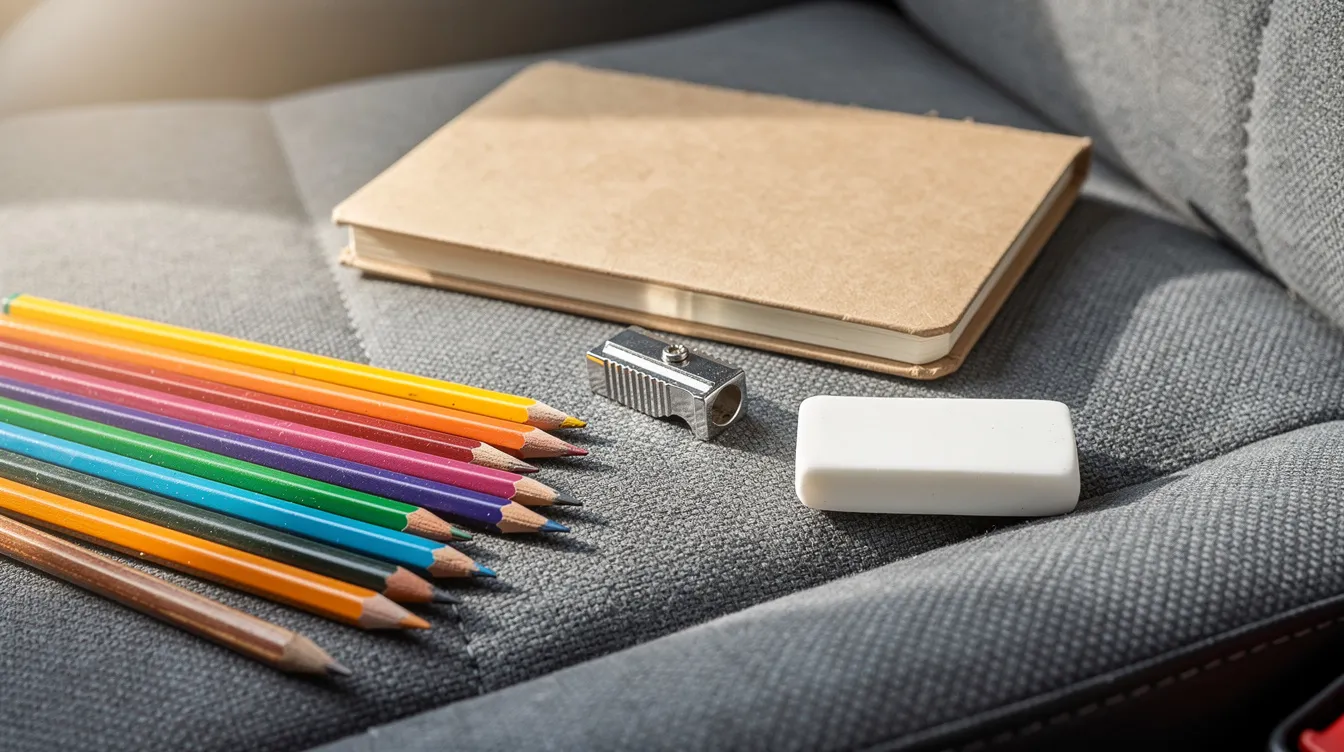
My glovebox holds an HB pencil, a sharpener, a soft eraser, about twelve colored pencils, a fine black pen for writing notes and a rubber band to keep the book shut. For painting I sometimes add a travel watercolor set, a water brush and a rag, but I would tell any beginner to start with pencil alone. It is quicker, it does not spill, and it keeps your attention on shapes. That is the whole kit. It cost less than a coffee a week over the first year.
Finding Time to Draw Outdoors
I sketch during short pauses on my route, usually pulling over at the same gate to draw whatever grows at the base of the post. Set a ten minute timer. You are allowed to stop when it rings, and knowing that is what gets you out the door. Unfinished pages still count. Natural environments provide soft fascination that helps restore mental fatigue, which is why even a brief session outdoors leaves me feeling better. Spending at least 120 minutes per week in nature improves health and well being, and those minutes add up quickly once the habit sticks. Regular time outdoors correlates with better physical health too.
Choosing a Simple Subject
Start with something small and still that fits in your palm: a single leaf, a fallen fern frond, a feather, a shell. A whole hillside gives the eye nowhere to land. Birds and clouds move, so they leave before you finish a line. Try them once you are warmed up and happy with quick marks. Observing nature improves focus and attention span, and a simple subject is the best way to feel that.
My Simple Process for Drawing Nature
Think in plain shapes, a long oval or a pointed triangle, not “a leaf.” Start with the largest shape, check proportions, then add detail. I rarely reach the details, and that is fine. Look at the subject about two thirds of the time. Draw lightly, count leaflets or petals, and accept uneven lines.
Drawing Leaves and Ferns
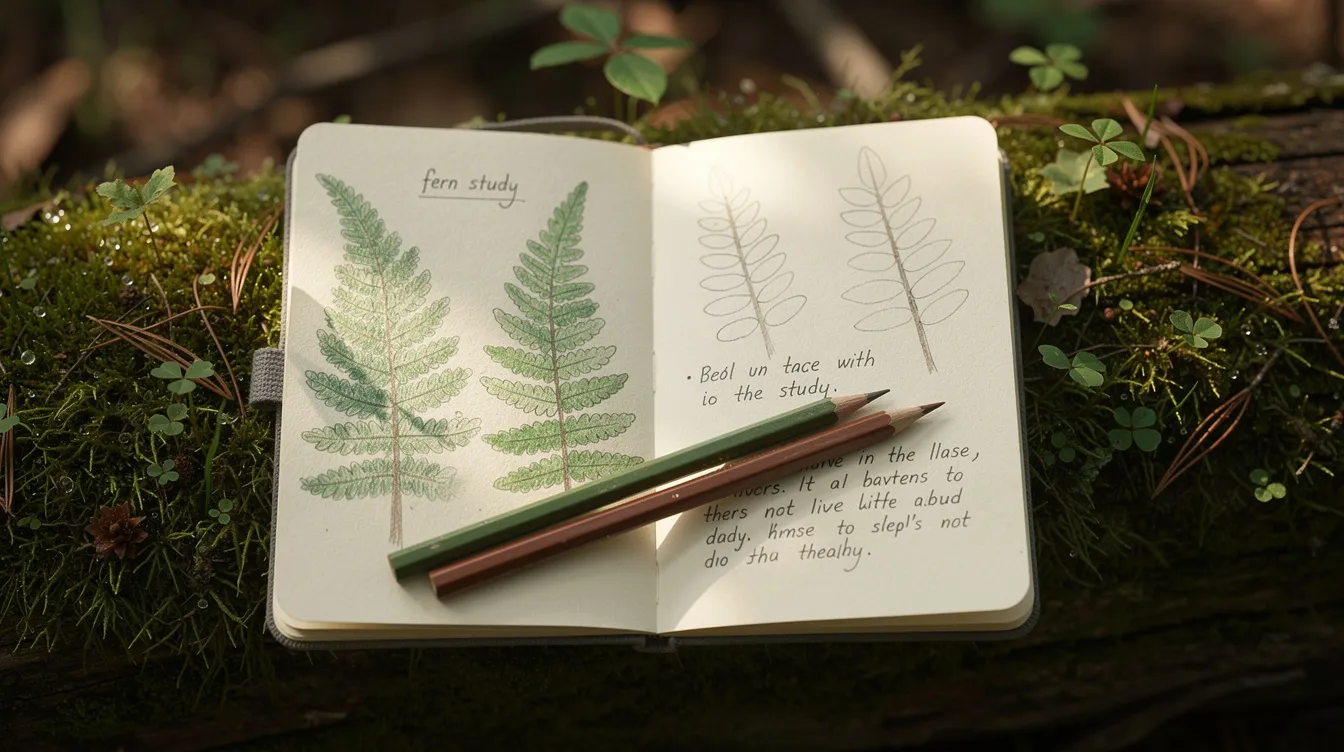
Find the central vein first, then the smaller ones. Overlapping fronds give depth. Layer several greens instead of picking one flat color, and leave some paper showing for light.
Using Watercolor in the Field
Test a color mixture beside the sketch, use extra water for softer edges, and let the paper dry before adding detail. Mix greens from a few colors rather than using one tube green. Keep pencil lines light, because they are hard to erase from watercolor paper. If you want to begin with paint, read my post on starting with watercolor journaling.
Writing Field Notes Beside My Sketches
Write the date, place and weather in plain words: “Tues, creek gate, drizzle, wind from the south.” Add a size, like “leaf about 4 cm wide.” Add one personal response per page. I often enjoy rereading the notes longer than I spend looking at the drawing. Your observations will surprise you months later.
Questions I Ask Myself
-
What first caught my attention, and what changed while I watched?
-
Which details did I almost miss, and what do I want to observe next time?
These two questions fit in the margin and turn a sketch into content I can learn from.
Seasonal Prompts for Nature Journaling
Keep each prompt to a short session, and revisit the same subject across seasons. People can strengthen relationships through shared outdoor experiences, so pick a prompt and invite someone along.
Spring Nature Prompts
Sketch one new leaf opening and compare a bare branch with fresh growth. Experiencing natural beauty can inspire awe and gratitude, and spring is the season that delivers both.
Summer Nature Prompts
Draw the strongest shadow in a familiar place, and record one plant showing signs of heat. June is a good month to sit with a sketchbook under a tree and notice how color shifts in strong light.
Autumn Nature Prompts
Compare two fallen leaves from the same tree, and draw one seed head before it disperses. The flora and fauna around you change fast in autumn, so sketching captures what will be gone in a week.
Winter Nature Prompts
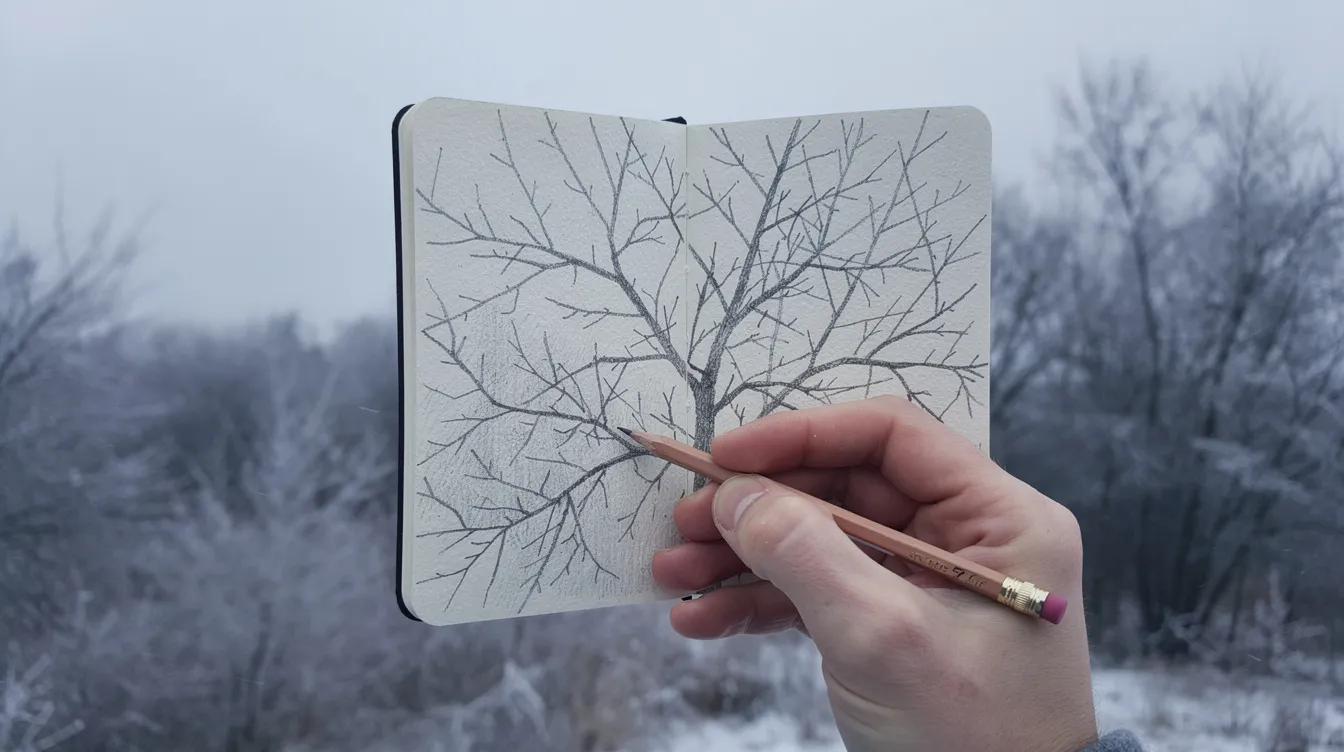
Sketch a leafless tree’s structure and describe how low light changes familiar colors. The wild, stripped look of winter branches is delightful to draw because every line is visible.
Preserving Small Finds Responsibly
Collect only what has already fallen, press it between absorbent paper in a heavy book, and label it with the date and location, as my grandmother did. Leave living plants undisturbed.
Looking Back Through My Journal
Compare old pages with recent ones. I keep my worst pages, and my first stiff, stick like fern shows how far my eye has come. Keeping a nature journal can track personal growth over time. Notice progress beyond artistic skill, like spotting changes in familiar places without a pencil in hand. Nature observation fosters a deeper connection to the environment, and reviewing old pages is where that connection turns visible.
A Gentle Invitation to Feel Drawn Into Nature
You do not need to be an artist or an author of beautiful illustrations. Observation matters more than polished drawings. Carry one small notebook outdoors and choose a nearby subject today. There is nothing wrong with a messy page at any age.
Here is a simple first week to try:
|
Day |
Subject |
|---|---|
|
1 |
One leaf, any leaf |
|
2 |
The same leaf again |
|
3 |
A seed or seed head |
|
4 |
A feather or shell |
|
5 |
Something at ground level |
I hope journaling makes attention feel restful, and that you find yourself drawn to nature through the looking, not the skill. If you love what you see on the page, send me a letter about it. I read everything.
FAQ
Do I need to be good at drawing to start? No. I was not, and I am still learning. A rough drawing does the looking job as well as a polished one, and it is the looking that matters. No information about your childhood art ability is relevant here.
What should I draw first? Something small, close and still: a leaf, seed head, feather or shell. Do not start with a public park panorama.
How long should each sketch take? Ten minutes is plenty. Use a timer to make starting easy and to slow yourself down.
Is it better to sketch outdoors or from photos? Outdoors when you can. The real thing teaches me more about scale, color and the feel of a place. Photos work on rainy days as a backup.
What if I do not know the names of what I draw? Write “unknown,” describe what you see, and look it up later or never. There is no number of recipes for getting it right. Just draw, and let the rest follow.