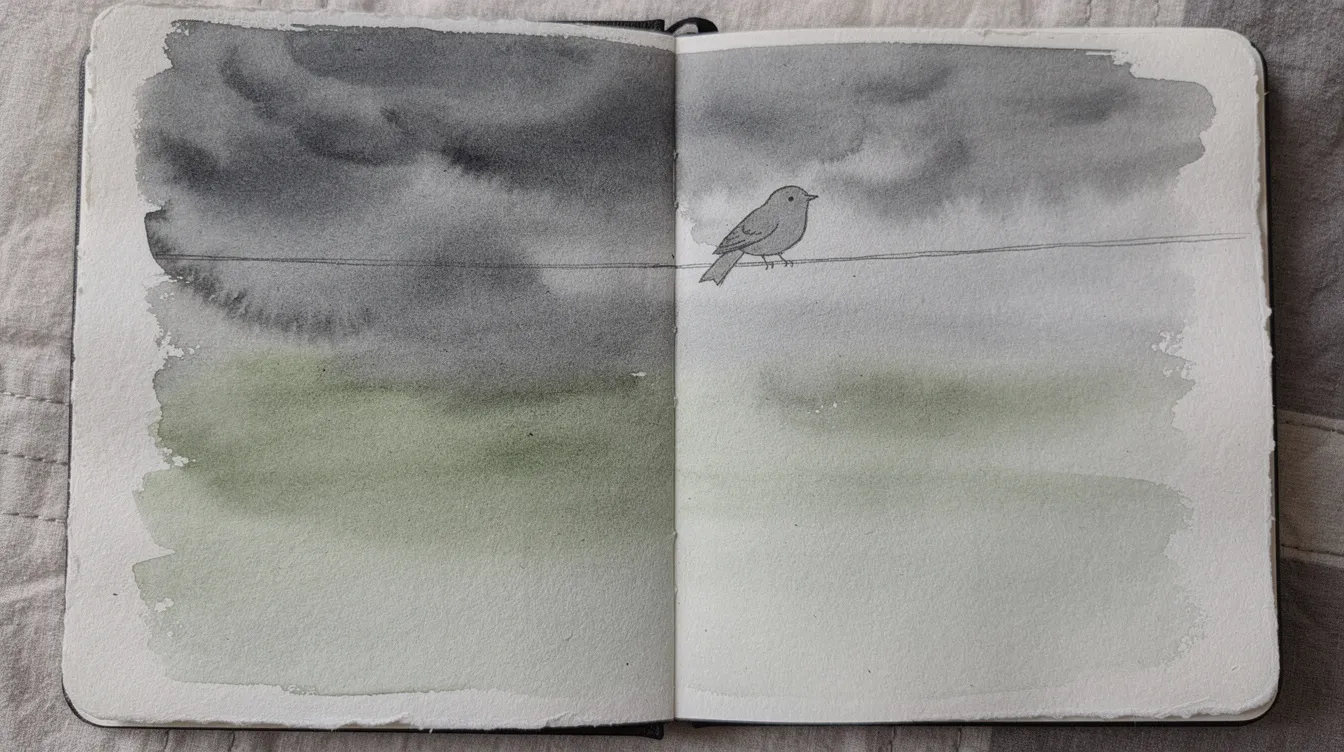
There was a Tuesday in autumn, maybe four years ago, when everything on my mail route went sideways. A gate latch cut my hand, two parcels got rained on, and a dog I usually like decided he did not like me. I sat at my usual lunch stop that evening with a sore hand and a bad mood, opened the little sketchbook from the glovebox, and painted a rough wash of grey and green across two pages. Then I sketched the nikau palm I could see from the driver’s seat and wrote three lines about the dog. By the time I closed the book, the day had shifted. Art journaling involves combining writing with visual elements like that, and it taught me something I keep relearning: making marks on paper helps me de-stress and process emotions in a way that talking about them does not always manage.
I should explain who I am. I am Wanda, and I drive a rural mail route outside Nelson, New Zealand. Six years ago I found a shoebox of my grandmother’s pressed ferns, each one taped to a card with a date and a place in her handwriting. I tried to draw one at the kitchen table, did it badly, and wanted to try again the next day. I have not stopped. I am untrained. I deliver mail. This is Fern and Pencil, a hobby blog, and I am not a professional artist or a therapist.
This post covers what an art journal actually is, the different types you can try, cheap supplies, prompts, and how to keep going. The simplest start is one small thing, ten minutes, a cheap notebook, and the date and place beside the drawing.
What Is Art Journaling, Really?
An art journal is a mix of images, words, and playful mark making kept together in a book or on loose pages, where the creative process matters more than “good” results. It differs from a written journal because it is more visual, and from a plain sketchbook because it holds feelings, collage, and color alongside sketches. But it can borrow from both. Art journals can include travel journals and visual diaries. A visual diary explores techniques and develops ideas over time. Pages can hold anything from a quick pen drawing of today’s weather to taped-in ticket stubs and painted backgrounds.
You do not need to know how to draw before you begin. The notebook is where you learn to look, and the drawing improves as a side effect. Art can shift your focus from logical analysis to sensory experience, and that shift is the point. Art journaling bridges verbal thought and visual emotion, creating a meaningful record of personal growth even when individual pages look rough. An art journal can be a space for self expression and exploration, and it allows for experimentation without pressure for perfection.
There are no rules about neatness, order, or style. Crooked writing, splatters, and crossed-out words are all part of it. For readers who want a wider introduction to the habit itself, I have a nature journaling basics post that goes deeper. This article is the shorter, kit-and-first-week version.
Different Types of Art Journals You Can Try
Choosing among types helps match the journal to how you want to create and how much time and money you have. Art journaling can include drawing, writing, and collage, and each format handles those differently. Here are five common types at a glance:
-
Simple sketchbook for portability and clean pages
-
Mixed media visual journal for heavier paper that takes wet media
-
Junk journal for recycled, low-cost freedom
-
Altered book for painting and collaging over existing pages
-
Tiny pocket journal for five-minute sketches anywhere
I keep more than one journal going. A pocket nature journal lives in my van’s glovebox, a larger junk journal sits on the kitchen table at home, and an old cookbook turned altered book is where I do painty play. Pick one type today, and remember you can switch if it does not feel good after a few pages.
Classic Sketchbooks and Visual Journals
A visual journal is a sketchbook with heavier paper where drawing, watercolor, and collage can live on the same spread. Common papers for art journaling include watercolor and mixed media paper, and visual journals usually sit around 160 to 300 gsm. Sketchbooks use lighter weight paper than visual diaries, so if you plan to add water, check the weight. Common sizes are A5 or about 8×10 inches. Brands like Strathmore Visual Journal or Stillman and Birn are well regarded, but any sturdy notebook works for beginners. Artist’s books are a type of art journal too, though most of us will never call our messy pages that.
These suit people who like bound books and want to see their progress over months in one place. My own pick is an A5 sketchbook with decent paper that fits a jacket pocket and handles a little water, so I can add watercolor later without too much buckling.
Junk Journals and Altered Books
A junk journal is a handmade book filled with recycled envelopes, packaging, old calendar pages, and music sheets. Junk journals use recycled papers and materials, and art journals can be made from loose paper, bound journals, or cardboard. An altered book is an old sturdy book, like a 1970s gardening manual or a discarded cookbook, that you paint, collage, and write over. Altered books are often used as junk journals because the structure is already there.
I turned a thrift store bird guide from the 1980s into one of my own art journal experiments by gluing in seed packets, painting over text with acrylic paint, and circling plant names that matched my mail route. The pages are already “imperfect,” so nothing feels too precious to cover or scribble on. That is why these are wonderful for low-pressure creativity.
Tiny Pocket Art Journals
Very small journals, like a 3×5 inch notebook or a handmade folded mini-book, slip into a pocket, bag, or glovebox. Art journaling can start with any type of paper, so even a folded sheet of printer paper works.
I use mine to sketch ferns, clouds, and roadside flowers between deliveries, usually with one pen and a small colored pencil set. If you are time-poor, start here. Filling a tiny page takes five minutes and still feels satisfying. A tiny journal can be a “test kitchen” for patterns, color swatches, or quick mood sketches before you try larger pages.
Gathering Simple Supplies Without Overwhelm
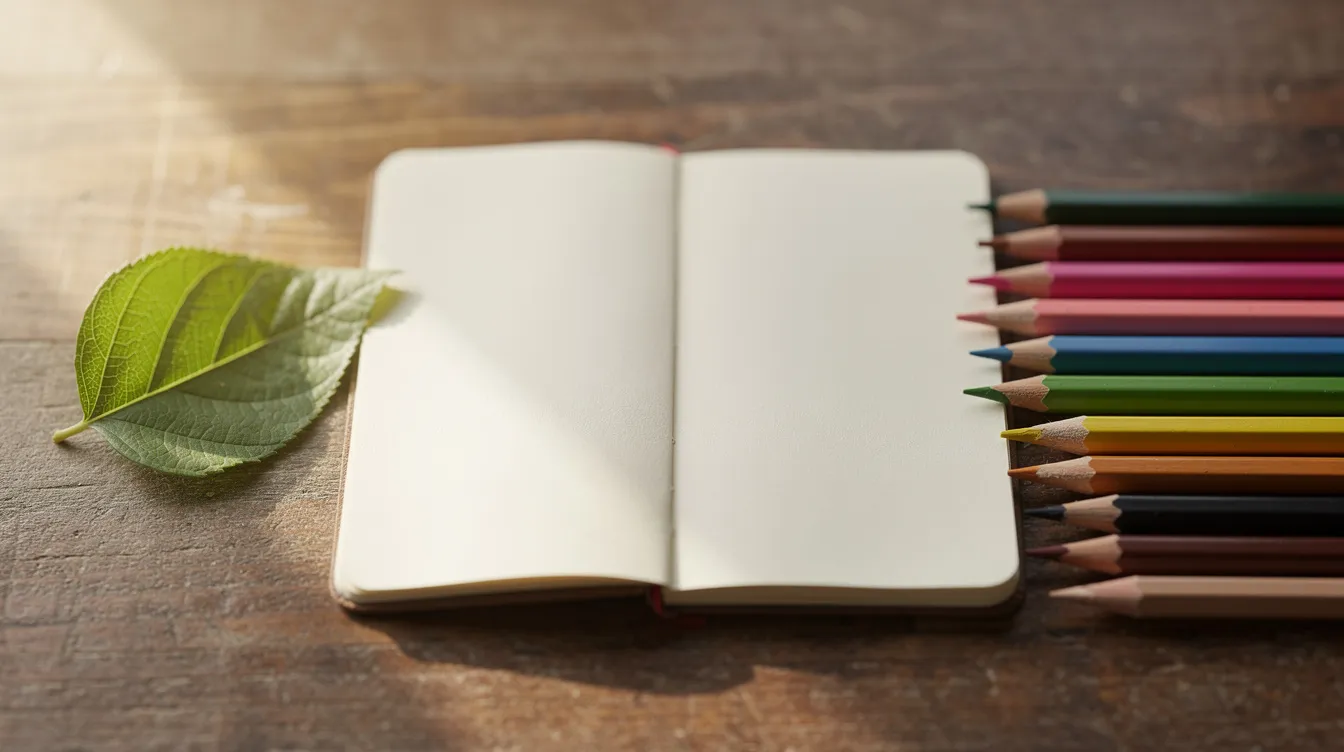
Start with what you already have: a cheap notebook, a ballpoint or gel pen, basic colored pencils, and a glue stick.
Here is the cheap kit I actually carry in the glovebox:
-
Writing and sketching: one 2B pencil and sharpener, a fine black pen (waterproof ink so it will not smudge over paint), twelve colored pencils (greens run out first, so I layer yellow-green over blue-green to stretch them)
-
Color: an optional travel watercolor set with a water brush, so there is no jar to spill
-
The book: a small sketchbook
If you only buy two things, buy the sketchbook and the pencil.
I will admit I have bought plenty of gear I never use. A big set of markers sat unopened for a year, and waiting for the “right” supplies is a trap. Art journaling is accessible to beginners without expensive materials.
For those who want painting in their pages, a starter kit might include one journal, one waterproof black pen, two or three tubes of acrylic paint, a small brush, and scraps of paper for collage. Acrylic paint is a popular medium for art journaling because it dries quickly, covers printed text in altered books, and makes good backgrounds for writing on top. Art journaling materials include paint, pens, and paper ephemera. You can use a variety of materials like paint and collage. Washi tape, stencils, and stamps are fun extras, but none of them are required to get started art journaling.
Free and Low-Cost Ways to Start Art Journaling Today
Free art journaling means using materials already on hand or rescued from recycling and nature. Good free bases include last year’s diary, a school exercise book, a half-used spiral notebook, or printer paper folded and stapled together.
Everyday collage materials to collect this week:
-
Envelopes from bills
-
Brown parcel paper
-
Tea tags
-
Seed packets with pretty images
-
Ticket stubs and local newspaper headlines
Found papers like ticket stubs and postcards are often used in collages, and they make a page feel tied to a real day. I also use fallen leaves, feathers, and bark rubbings in colored pencil, pressing a leaf flat on the page and tracing around it or rubbing a pencil sideways over bark texture. My grandmother’s pressed ferns are a reminder that people have recorded plants this way for a long time. Collections of pressed specimens are kept in a herbarium, and that tradition stretches back centuries.
Choose one free base and make your first page the same day you read this post, even if it is only swatches of color and a date.
Journaling With Art for Creative Self Care
Combining words and images in an art journal can act as gentle self care, especially on days when writing full sentences feels hard. Art journaling provides a safe personal space for emotional expression. It serves as a sanctuary for self care because it is private and yours alone, a no holds barred space for whatever you need to put down.
On stressful days I use a simple page pattern: a loose acrylic background in whatever color matches my mood, a rough sketch of something from my route (like a tui on a power line), then three honest lines about how the day felt. Art allows for the externalization of complex emotions, and art journaling allows for playful exploration of feelings. Visual elements can express feelings without relying solely on words.
A few prompts for creative self care:
-
Draw the weather and write one sentence about your mood
-
Collage colors that match your energy today
-
Fill a junk journal page with things that smell like home
Pages do not need to look cheerful to count. Stormy colors, angry scribbles, and messy writing are all part of the reflective practice in art journaling that supports emotional understanding. Creating art can transform feelings into something beautiful, or at least into something outside your head. Art journaling helps overcome perfectionism and the inner critic because the page is only for you. It can clarify decisions during difficult phases. Calling it one of my best coping skills might sound dramatic, but some coping skills work best when they are quiet and private.
How to Start Your First Art Journal Page
Choose a page. Write the date and the place. Apply a loose wash of watercolor or acrylic in one or two colors. Then draw a small subject: a leaf, a cup of tea, a window view. Add a few short handwritten lines over or beside the paint. I note the place, the weather, one thing I did not expect, and a question to look up later (like why a fern had rusty spots underneath). Tactile engagement in art journaling encourages focus and exploration, and scribbling without structure can enhance presence.
Here is a seven-day starter I have found useful:
-
Draw the outline of a single leaf (no color)
-
Draw the same leaf again, adding veins and detail
-
A different leaf or plant
-
Add color in light layers with colored pencil or a light wash
-
A small group, like a fern frond or a handful of stones
-
Something that moves: a bird, a cloud, a cat
-
Look back at the week and write what changed
Keep sessions to ten or fifteen minutes. Accept the page as “done” even if it looks incomplete. Art journaling encourages experimentation without pressure for perfection. Free drawing to music can inspire creative expression too, if silence feels heavy. The first page is the hardest. The next ones feel lighter once the book is no longer a blank page.
Ideas and Prompts to Keep Going When You Feel Stuck
Most people feel blocked or bored at some point, and a small list of prompts makes continuing easier. Prompts can help document personal histories like diaries, and visual storytelling can help explore dreams and aspirations.
Nature prompts from my own pages:
-
Sketch the same tree each month and notice what changes
-
Draw the contents of your pocket
-
Paint a map of your street with simple shapes
-
Draw a fern stem first, mark where the leaflets branch, and only finish a few
-
Document one thing each day that you find lots of beauty in
Junk journal ideas: glue a receipt on a page and paint around it, circle one printed word in an altered book and doodle outward, or fill a spread with labels and tags.
Week-long theme experiments: only draw green things, use circles on every page, or limit yourself to two supplies. These constraints are a strange kind of inspiration. For readers who want a reason to get outside and pay attention, I have a post on getting drawn into nature that goes deeper on sketching as a way to notice more.
Weaving Writing and Images Together
There are several ways to blend text with pictures. You can write first then draw around the written words, or draw first then tuck words in the gaps, or layer writing over dried paint or collage. Use plain handwriting and tiny side notes rather than worrying about perfect “hand lettering.” The artwork is personal, and so is the writing.
Small writing formats that work well: weather notes, overheard phrases, plant names, dates, and “today I” lists. I write field-note captions under sketches in my nature journal with date, place, and species, and they help me remember the day months later. I judge a page by whether I looked closely, not by whether it looks good. Combining writing and art can help in recognizing personal values and beliefs over time, and combining art and journaling encourages deeper personal reflection. Reviewing visual journals can reveal recurring emotional themes you might not notice otherwise.
The careful plant drawing behind those captions has its own long history, and an overview of botanical illustration shows where our wobbly sketches fit in a tradition going back centuries. Every art journaler who draws a leaf with a date beside it is part of that.
Caring for Your Art Journals Over Time
Art journals need no special storage, but a few habits help them last. Let thick acrylic paint dry fully before closing pages. Keep books off damp windowsills. I store mine on a shelf in the hallway, spines out with the year written in marker.
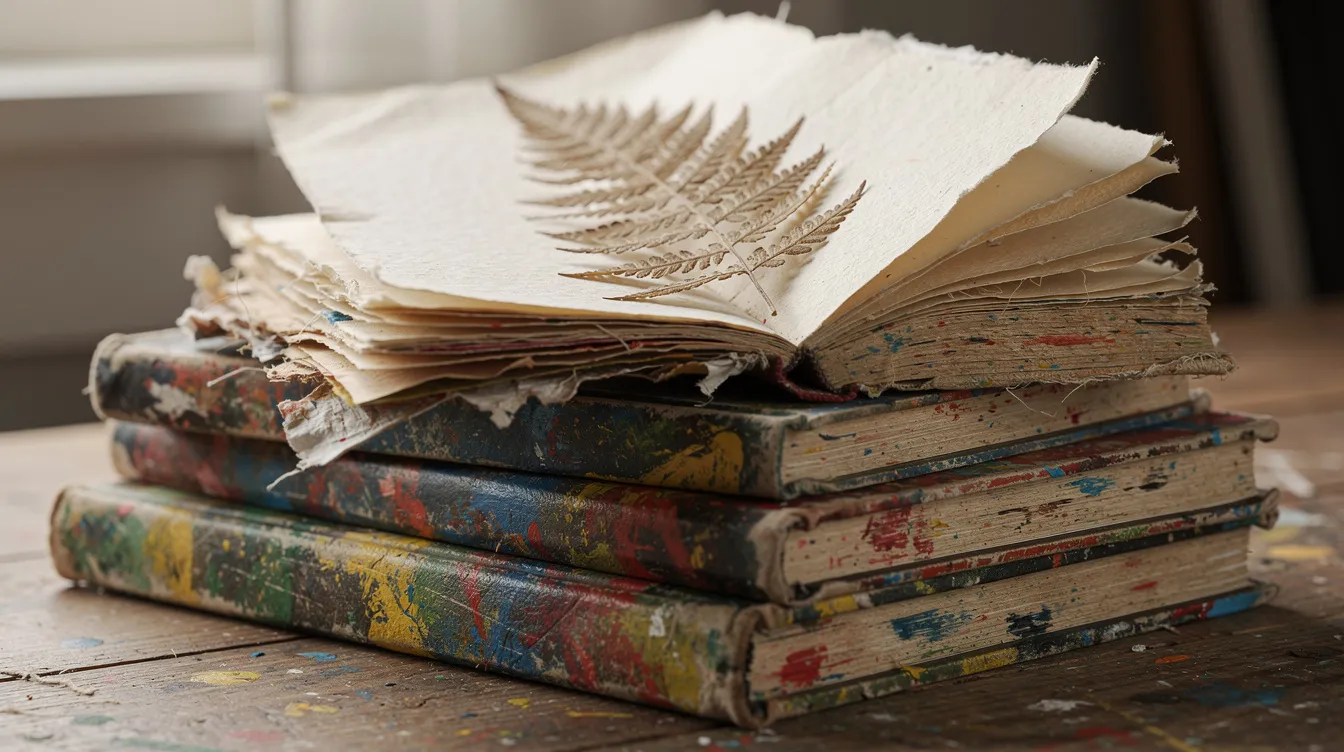
Flip through old journals every few months to notice growing ease and recurring motifs. I never tear out bad pages, because they show how far you have come. You do not need to finish every journal you start. Stopping partway and beginning another is normal, not failure. Well-used journals with paint-crinkled pages, taped repairs, and stray dried leaves tucked inside have their own charm. That wear is part of the story, purely filled with what mattered at the time.
Making Journaling With Art a Gentle Habit
Practical tips for busy life: five-minute doodles in a pocket journal, ten minutes of background painting before bed, or one longer Sunday session. Attach the habit to something you already do. Mine is the lunch break at the same gate every Tuesday, and yours might be coffee or the bus ride home. It feels good when you stop reaching for it and it is just there.
Keep the pen clipped to the journal and the journal where you will trip over it, so there is never an excuse. Touching the journal briefly three times a week beats waiting for rare “perfect” sessions. Ten minutes at a lunch stop beats a perfect afternoon that never comes. As an expressive outlet, art journaling is a slow, private conversation with yourself that travels alongside daily life, just as my glovebox journal rides along my New Zealand mail route. Every kind of art journaler, from someone filling bullet journals with doodles to someone painting over old cookbooks, knows the same thing: you create the habit by showing up, not by being good.
FAQ
Do I need to know how to draw to begin? No. Start with simple outlines of leaves, stones, or cups, and let your eye improve with practice. The journal is where you learn to look, and the figure of each leaf gets steadier with time.
What is the cheapest way to start? A small sketchbook and a pencil. That was all I carried for my first few months, and it was enough to explore and experiment.
How long should each session take? Ten to fifteen minutes, since short sessions are easier to repeat and still let you play with styles, techniques, and ideas you want to develop ideas around.
Should I draw outdoors or at home? Either works. I draw leaves and flowers I bring inside, and save the van stops for birds and sky. Any space where you can sit for a few minutes will do.
What if I hate my drawings? Almost everyone does at first. Date every page and look back after a month. I hope you will be surprised. The pages that felt ugly at the time often turn out to be the ones where something shifted.