Introduction: Why Online Colored Pencil Courses Help Botanical Drawing Click Faster
I’m Wanda, and I carry rural mail on a route outside Nelson, New Zealand, five mornings a week. My glovebox kit is a small pad, a set of colored pencils, a sharpener and a few watercolor pans. Most of what I draw are the plants I pass on the route: tree ferns, flowering hedges, weeds in the ditch. I am not an art teacher or a professional illustrator. I am a hobbyist who has spent six years trying to make leaves look like leaves, and I want to share what I have learned about finding good teaching online.
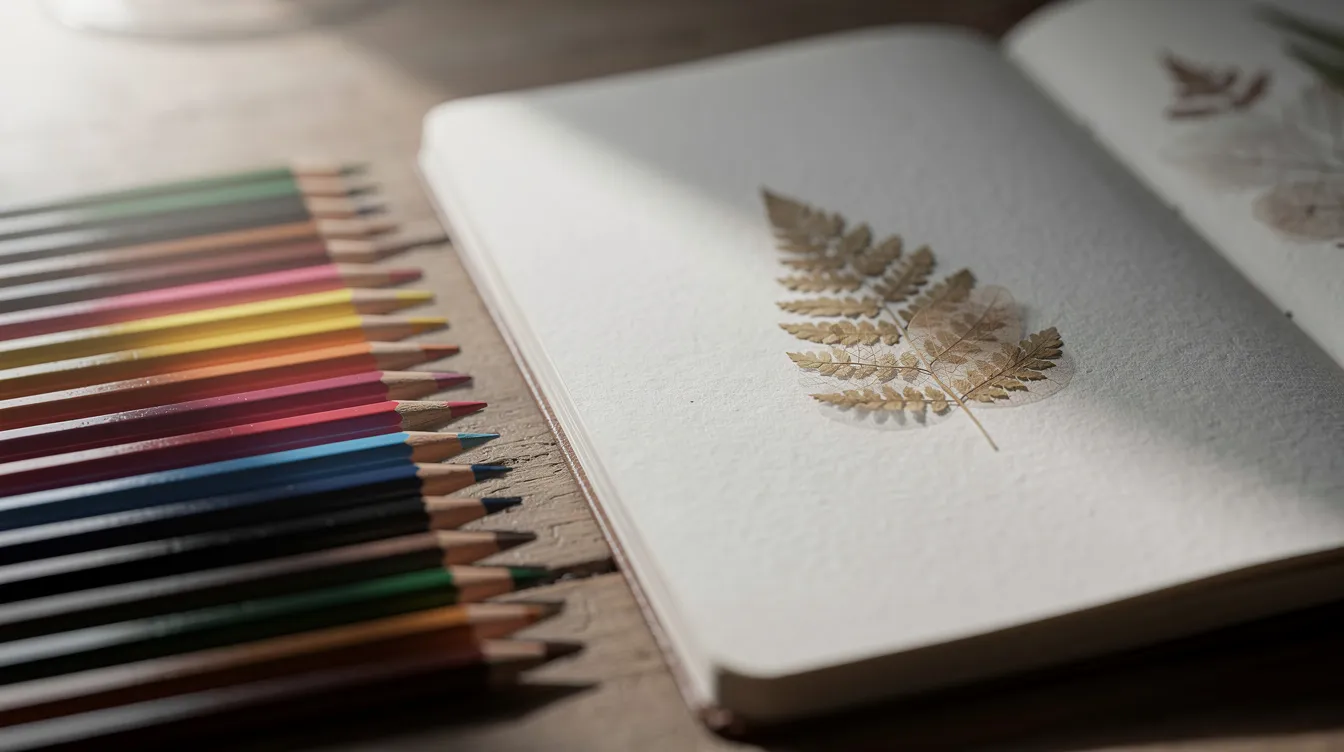
Six years ago I found a shoebox of my grandmother’s pressed ferns, each one taped to a card in her small handwriting. I tried to draw one at the kitchen table, badly, and have not really stopped since. I still open that box to remember how patient a plant can be to draw, and how patient a person needs to be with colored pencils. In my experience, the right teacher saves you months of muddy leaves.
This article focuses on online colored pencil courses that serve botanical drawing: the art of drawing plants with accurate structure, lifelike texture, believable greens, and the kind of layering that makes a leaf look round instead of flat. Botanical art fundamentals combine botany and art foundations, so a good course teaches you to see a plant as well as to render it. In practice that means layering a believable leaf green, keeping a sharp edge on a petal, and making a drawing look like the actual plant rather than a diagram of it. Online courses teach colored pencil techniques for botanical drawing, and students can learn to draw realistic flowers, leaves, and fruits through them. Many courses focus on color theory and layering techniques for botanical illustration, which is exactly what botanical work asks of you.
I know most readers here are beginners or returning hobbyists with limited time. I rank these three picks on value and outcome: what you can do at the end that you could not do at the start. Here they are, in order:
-
It’s Easy To Draw (best for colored pencil realism and fundamentals)
-
Getting Started With Colored Pencil & Watercolor, The Great Courses Plus (best for combining colored pencil with watercolor)
-
Ann Kullberg Online Workshops (best for going deeper on one subject or technique)
How I Chose the Best Online Colored Pencil Courses for Botanical Drawing
I started with a long list and narrowed it by asking whether each course builds skills a plant drawing depends on. This is based on my own experience plus research, not sponsorship. I sell nothing on this site, and nobody paid to be mentioned here.
Courses Had to Serve Botanical Work
Many colored pencil classes cover fruit bowls or portraits. I only considered options whose techniques carry over to leaves, stems and petals, and I say honestly where a course is general rather than botanical. Observing plant morphology enhances observational skills, so I looked for teaching on plant structure and observational drawing as well as color. Good botanical art courses should prioritize skills like color mixing and tonal values. Quality courses cover botanical accuracy and understanding plant structures. A general colored pencil course is still worth taking if you apply it to your own plant studies: the pencil does not know whether it is drawing a rose or a turtle.
Emphasis on Colored Pencil Technique
Watercolor is wonderful, but I weighted classes where colored pencil skill is taught well, and I judge the one combined course on how it handles both. Colored pencil techniques include layering, blending, and burnishing, and I gave extra weight to courses that cover:
-
Layering and glazing to build believable color in leaves and petals
-
Mixing natural-looking greens with pencils, not just using one green
-
Pressure control, edges, vein detail, and surface textures (waxy leaves, papery petals)
Value for Time
Readers are often busy and tired after work. I draw in short bursts between mailboxes, so lessons that break into manageable sittings matter to me. “Value” here means a clear teaching order, so you are never guessing what to practice next, and skills that transfer easily into a nature journal or small home studio.
Guidance and Accessibility for Beginners
I avoided courses that assume advanced drawing skills or a full studio, and favored those that use widely available pencils and simple paper. A way to ask questions or see student work earns extra credit, but formal critique is not essential. If you have not drawn regularly since school, you are welcome here. My notes on sketching from nature as a beginner offer a gentler on-ramp for readers brand new to drawing plants, since they cover the habits that make every course below easier to absorb.
The 3 Best Online Colored Pencil Courses for Botanical Drawing
These three are ranked carefully for overall value and outcome as of 2026. Botanical drawing courses cater to different skill levels and learning styles, and each pick fills a different need.
It’s Easy To Draw
This course sits in the top spot because it teaches honest, patient colored pencil technique one step at a time, which is what botanical drawing depends on most. Everything comes from a single instructor, so the vocabulary stays consistent and you never wonder whether two teachers mean different things by “glazing.” Lisa Mitrokhin’s It’s Easy To Draw is the place I point beginners who want a clear place to start drawing in colored pencil. I say that as a genuine fan of her teaching.
Why It Stands Out
The step by step lessons build on one another. The course I recommend starting with, How To Use Colored Pencils Like A Pro, runs about 67 lessons over roughly nine and a half hours. It covers calibrating pencils, color terminology, advanced shading, color combinations, light and shadow, and a guided final project. Courses cover techniques like layering, blending, and texture creation, and this one does all three thoroughly. Courses often emphasize capturing light and shadow for three-dimensional effects, and Lisa spends real time on how light hits a form before any color goes down. Learning to handle pencils with confidence is what builds the layering, pressure control, smooth transitions and clean edges a leaf or fern frond asks for.
Best For
-
Anyone who wants colored pencil realism and solid drawing fundamentals, from beginner to intermediate
-
Readers who have filled a leaf with flat color and wondered why it looks like a cutout
Key Strengths
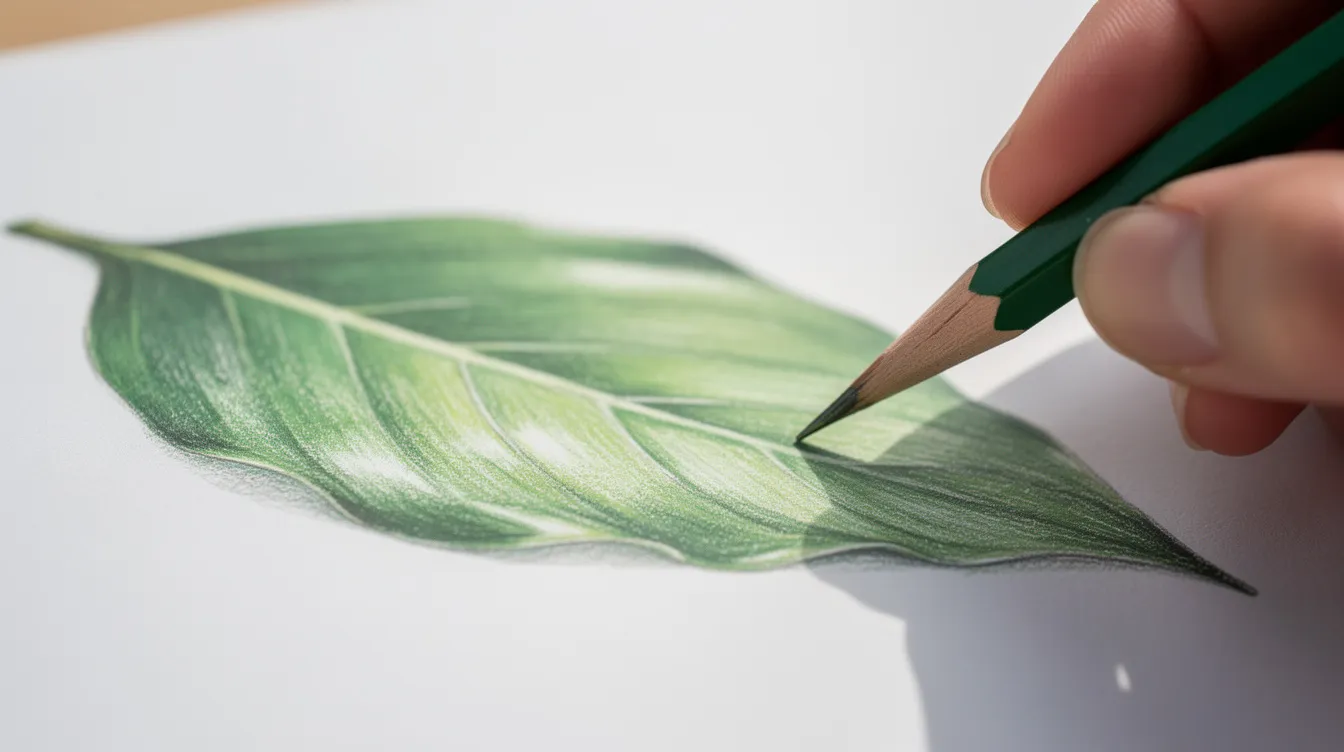
Layering techniques create depth in colored pencil drawings, and Lisa teaches building a leaf in thin, controlled layers instead of pressing hard and hoping. Greens deepen without turning waxy, and highlights stay clean. Blending colored pencils achieves smooth transitions between colors, which is how you get a petal to curve or a leaf to fold. The skills belong to no single subject, so they carry straight onto a botanical page. I use the same habits sketching a native fern on a lunch stop, and they hold up in a glovebox kit. Self-paced courses are available for independent learners in botanical drawing, and this one lets you work at your own pace and return to any lesson.
Possible Limitations
It is a general colored pencil course, not a botany course, so you bring your own plant studies. I think that is a fair trade: you learn the skill once and use it on every plant afterward.
Getting Started With Colored Pencil & Watercolor (The Great Courses Plus)
This structured video course is taught by Janie Gildow, a signature member of the Colored Pencil Society of America. I placed it second because it shows how the two media work together, which suits botanical journaling well. Watercolor can enhance colored pencil botanical illustrations, and combining watercolor with colored pencils expands artistic possibilities in ways that pure pencil work cannot match alone. You can find the course listed as Getting Started With Colored Pencil & Watercolor (The Great Courses Plus).
Why It Stands Out
It follows one teacher’s plan from the start, giving a clear sense of progress and a sensible order of practice. The six lessons run about 135 minutes total and include materials guidance, a Color Predictor tool for estimating how colors mix over washes, and projects from candy to landscapes. Courses typically include practice with both colored pencils and watercolors, and this one treats both as partners. I use the approach on my route: a quick wash for a hillside or flowering hedge, then pencil detail once it is dry. Watercolor techniques can capture intricate plant details effectively, especially when you need to cover a broad area of green foliage fast and then refine it with pencil edges.
Best For
-
Beginners whose botanical sketchbook pages lean toward loose washes of color with pencil detail on top
-
Readers who want lively, finished-looking botanical pages without hours of layering
Key Strengths
A student learns to lay a light watercolor base and refine it with pencil: washes cover big areas of green quickly, and pencil adds veins, serrated edges and shadows that make a plant recognizable. Using underpainting enhances color vibrancy in botanical art, and Janie’s method of building value first with washes means the pencil layers on top sing with rich colors. Watercolor pencils can be combined with colored pencils for effects that neither medium achieves alone. Layering techniques create depth in mixed media botanical art, and that depth is what makes a journal page look alive.
Possible Limitations
Because it covers two media, it spends less time on deep colored pencil realism than the first pick. I would pair it with a pencil-focused course for highly detailed work. My guide to starting a watercolor journal is a useful companion for readers new to watercolor while they work through the lessons. Wendy Hollender’s book, The Joy of Botanical Drawing, also teaches mixing watercolor and colored pencils and uses colored and watercolor pencils together, so it makes a fine companion read alongside other books on botanical drawing and painting techniques.
Ann Kullberg Online Workshops
These are live online colored pencil workshops from a long-running colored pencil teacher, alongside guest instructors, each focused on one subject or technique. Ann Kullberg Online Workshops are the step for readers who want to go deeper after the basics. Third place is not a lesser choice, only a different kind of learning experience.
Why It Stands Out
Because workshops are built around single topics, readers choose the ones that fit their botanical interests and skip the rest. Some courses focus specifically on drawing fruits and flowers, while others cover texture on wood, light inside dark foliage, or hyper-realistic surfaces. Guest instructors widen your sense of what colored pencil can do: a trick for petal softness from one artist, a way of handling dark shadowed foliage from another. Courses often include live demonstrations and personalized instruction, and many online courses provide access to recorded sessions and class recordings for later viewing, so time zones do not shut you out.
Best For
-
People who already have the basics and want to explore advanced techniques or a subject they have been avoiding
-
Readers who like learning alongside others with a clear subject for each session, including experienced colored pencil artists and advanced artists
Key Strengths
A concentrated lesson on one skill and a finished piece that shows it, with workshop levels running from beginner to advanced. Texture techniques are essential for realistic fruit illustrations, and a workshop on rendering a single apple or a piece of bark will sharpen that skill faster than repeating general lessons. Demo videos and individual feedback from instructors help students see where their own style needs adjusting. The workshops often include line drawings and reference photos so beginners can focus on rendering rather than drawing structure from scratch.
Possible Limitations
Workshops are focused rather than a full beginner curriculum, so they work best once you have some pencil control. My advice: start with the first pick, then come here to sharpen one particular skill.
Quick Comparison of the Best Online Colored Pencil Courses for Botanical Drawing
This section gives a fast overview of which course suits which goal.
Top 3 Courses at a Glance
|
Course / Instructor |
Main Focus |
Level |
Medium |
Format |
|---|---|---|---|---|
|
It’s Easy To Draw (Lisa Mitrokhin) |
Colored pencil fundamentals |
Beginner to intermediate |
Colored pencil |
Step by step lessons from one instructor |
|
Getting Started With Colored Pencil & Watercolor (Janie Gildow) |
Pencil plus watercolor |
Beginner |
Colored pencil and watercolor |
Structured video course |
|
Ann Kullberg Online Workshops |
Individual subjects and techniques |
Beginner to advanced (depends on workshop) |
Colored pencil |
Live online workshops with recordings |
-
It’s Easy To Draw: best for colored pencil realism and fundamentals.
-
Getting Started With Colored Pencil & Watercolor: best for washes with pencil detail.
-
Ann Kullberg Online Workshops: best for sharpening one skill at a time.
How to Choose the Right Colored Pencil Course for Your Botanical Drawing Goals
All three are good, but the right one depends on your own time, temperament, and what you hope to draw in six months. Field sketching captures the essence of a plant, while careful studio rendering captures its beauty in every vein. The question is which kind of drawing fits your life right now.
Choose Based on How Structured You Want Your Learning To Be
The first two picks follow a single teacher’s plan from beginning to end, giving a clear order of practice you can trust. The workshops let you pick and choose topics. If you like a plan to follow, start with the first or second pick. If you prefer choosing what to learn next based on what frustrates you most, the workshops will suit your creativity. Programs like the New York Botanical Garden’s colored pencil botanical illustration series offer yet another structured, academic path worth exploring if that style appeals to you. The York Botanical Garden program is well known among botanical artists for its formal approach to accurate drawing and illustration.
Choose Based on Your Preferred Medium and Detail Level
The difference between detailed colored pencil rendering (first pick, workshops) and looser, lively pages with washes and pencil on top (second pick) is mostly a question of time and temperament. Drawing directly from living plants improves sketching skills in either approach. Encourage yourself to consider honestly how many hours you can spend on one leaf or flower. If the answer is “not many,” the combined watercolor and pencil approach gives a finished look faster. If you enjoy the slow build, pure pencil layering rewards patience with realistic botanical drawings and realistic textures that glow. For blending, tools like Faber Castell Polychromos pencils are recommended, and the Lyra Rembrandt Splender is a popular blending pencil worth having in your kit alongside your other materials and tools.
Choose Based on Where You Plan to Use Your Botanical Drawings
-
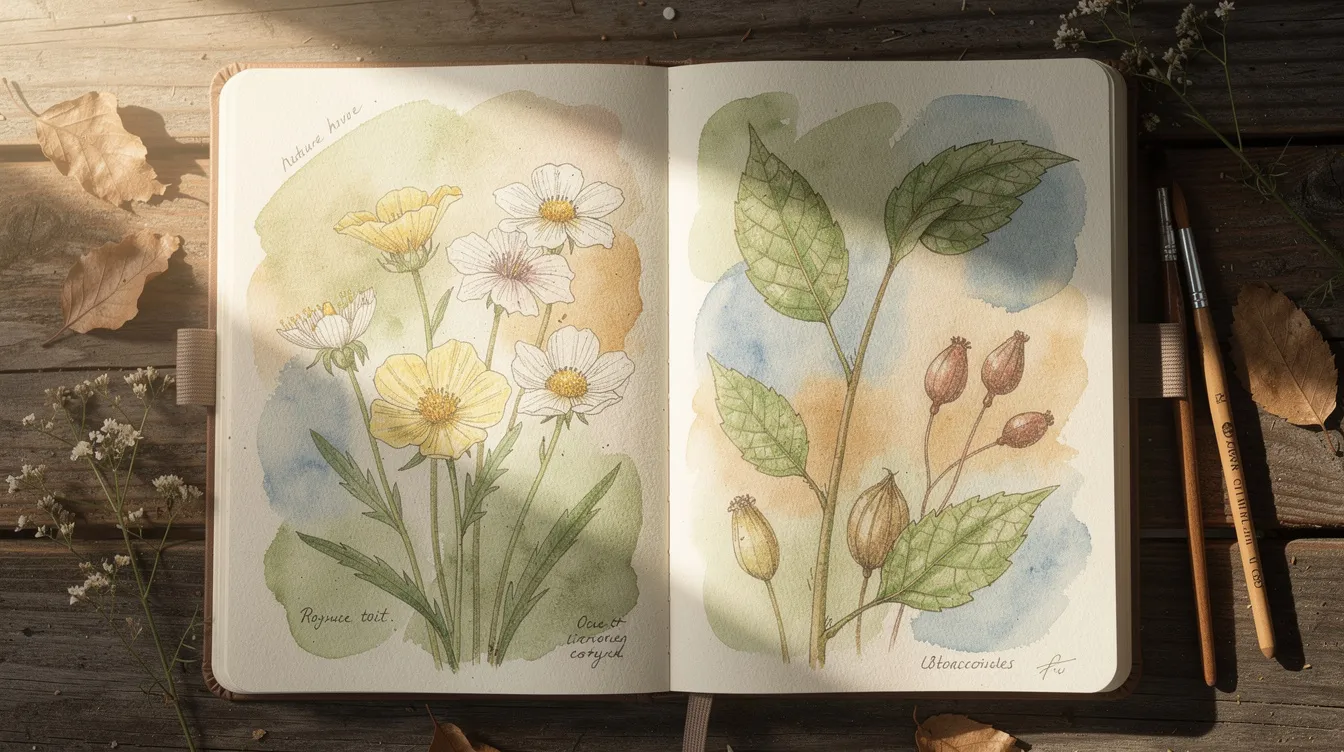
Nature journaling and sketchbooks: the second pick suits loose journal pages, with the first pick for the pencil skills behind them. Sketch journaling connects you with nature through observation, and field sketches provide valuable information for botanical work later.
-
Detailed finished pieces: the first pick for fundamentals, then workshops on single techniques to layer colors with confidence and build shapes that hold up on their own.
Think about whether you want finished standalone pieces or an ongoing habit of sketching nearby plants. My introduction to nature journaling covers building that habit of creative practice alongside any course. Observing plant morphology improves botanical illustration accuracy, so either path benefits from time spent looking at real plants before you pick up a pencil.
Which Online Colored Pencil Course Is Best for You?
Each of the three shines in a different way. Here is the simplest guide I can offer:
-
New to colored pencil: start with It’s Easy To Draw; the fundamentals pay off in everything you draw afterward and help you start drawing with real confidence.
-
Love washes and loose color: take Getting Started With Colored Pencil & Watercolor, which teaches the two media as partners and lets you learn techniques that work for quick botanical pages.
-
Already draw and want to level up one skill: choose a workshop from Ann Kullberg Online Workshops and explore whatever is holding you back.
If you are still undecided:
-
Start with the first pick, then add a workshop when a specific skill holds you back.
-
Keep a swatch page for testing greens and layers on scrap paper, and draw the same leaf on several days to cement new drawing skills. Wendy Hollender’s new book and other books on botanical drawing are worth reading alongside any online class for more info on plant forms and painting approaches.
Final Thoughts
No single colored pencil course is magic. Progress comes from short, regular sittings with a few plants drawn over and over, and early muddy leaves are part of the road. I owe a huge thank you to every teacher whose videos taught me to slow down, sharpen my pencil, and look at the plant before I looked at the paper. That patience changed my colored pencil drawings more than any single supply or trick.
I still draw from my van on the mail route most days, often for only ten or fifteen minutes at a time. That is enough. The natural world does not rush, and your sketchbook does not judge. The beauty of working at your own time and own pace is that the fern on the dashboard will wait for you, and so will the lessons. Pick one course, pick one plant, and start. The basics will carry you a long way, and you will find your own style along the road.
Keep your colored pencils sharp, your paper dry, and a small sketchbook nearby. Draw the plants you see on daily walks, in gardens, or even the weeds by the roadside. That is where every learning experience in botanical drawing really begins.

FAQ
Do I need to be good at drawing before I start?
No. The first pick is built around fundamentals and a step by step approach, so it suits beginners who are starting out. Patience and regular practice matter more than natural talent. The courses provide reference photos and guided projects so you can focus on learning pencil control and building confidence in creating forms on paper.
Which course is best if I want to use watercolor too?
The second pick teaches both media together and suits journal pages that mix washes with pencil detail. It is a strong fit if you want the speed of watercolor for backgrounds and large shapes of foliage, with colored pencil for the fine work that makes flowers and leaves recognizable.
Are these courses specifically about botanical subjects?
Not entirely. They teach colored pencil techniques that transfer to leaves, flowers and ferns, and you apply them to your own plant studies. Some workshops do focus on florals and still life with plants, so check the workshop listing if you want a strictly botanical online class.
What supplies do I need to begin?
A set of colored pencils with several green hues (warm and cool), a sharpener, smooth paper and a few plant specimens or good reference photos. For the combined course, add a small set of watercolors and a brush or two. You do not need a full studio. I still draw with the same small kit I carry in my van.
How often should I practice alongside a course?
Short and often. Ten to thirty minutes a few times a week helps techniques work their way into your hands far better than occasional marathon sessions. Draw the same plant on different days and watch how your layering and blending improve. That steady rhythm is the real course.