Nature observation can be a meaningful way to connect with the environment, and you do not need a science degree or a fancy sketchbook to start. This article is the method I use, the mistakes I have made, and the small habits that stuck. If you are brand new to the idea and want the basics first, this is where I would begin.
Quick start: how to observe nature today
I’m Wanda. I deliver rural mail on a route outside Nelson, New Zealand, and I started nature observation from the front seat of the van. The whole method fits in one sentence: note the date, place and weather, write what you actually see, hear and smell in plain sentences, and finish with one question you cannot answer yet. That is the first step, and for some days it is the only step, and that is fine.
You need no special gear. A 10-minute mindful nature walk can enhance observation skills, and even a sit on the front step counts. Observation is a conscious act of paying attention, not a performance. Here is how to begin today:
-
Pick one tree within sight and describe its shape, color and any movement.
-
Look for one bird. Where is it sitting? What is it doing? How big is it compared to your hand at arm’s length?
-
Close your eyes for thirty seconds and listen for one repeating sound.
-
Open your notebook and write one line about any of those things.
Nature appreciation can be cultivated through observation and curiosity, not by knowing everything in advance. If you wrote one honest line, you just made your first nature journal entry. Getting started with nature journaling really is that small.
My own path into observing nature
In mid 2020 I found a shoebox in my mother’s wardrobe full of my grandmother’s pressed ferns, each one taped to a card with a date and a place in her careful handwriting. Nature journals can include sketches, notes, and pressed plants, and hers were all three at once, though she probably never called them that. I tried to draw one of the ferns at the kitchen table, did it badly, and wanted to try again the next morning.
I had already been driving the mail route outside Nelson since 2018, but I had never really looked at the road. Keeping a nature journal in the van glovebox changed that slowly. The moment I remember most clearly is 15 September 2021, when I wrote down the exact day the kowhai on Motueka Valley Highway burst into bloom. I had driven past that tree hundreds of times. That was the first time I noticed when it happened.
I am a hobbyist, not a naturalist, scientist or art teacher. For me this practice is about attention and affection, not perfect drawings. Nature observation helps ground us in the present moment, and nature appreciation fosters a sense of connection and peace. I did not expect that when I started. I just wanted to draw a fern.
What is nature observation, really?
Nature observation is the habit of paying close, repeated attention to living things and weather around us. It is different from just seeing. When I drive the route on autopilot, the hedgerows are a blur of green. When I slow down and observe, that blur becomes five different shrubs, all flowering at once, with a fantail working through the lowest branches.
You do not need wild bush for this. Lichens on a city wall, moss between paving stones, clouds over a car park all count. The natural world is present in every environment, not just forests and national parks. Noticing small details in nature enhances overall awareness and appreciation, and over time nature appreciation fosters empathy towards the environment in a way that surprised me.
Early on I wrote entries like “beautiful fern, so peaceful” and learned nothing from them. They described my feelings, not what was in front of me. The moment I started describing what I actually saw, the notes became useful for drawing, for writing, and even for basic citizen science. If you want your observations to matter later, write the thing itself, not just how it made you feel.
Using all five senses to observe the natural world
Nature is not just something we look at. Engaging all five senses enriches the nature observation experience, and most of us forget to use at least three of them.
Sight is the sense we reach for first. On my route I notice things like the way morning light turns a stand of beech almost golden, or the slow unrolling of a fern frond over a week. But sight improves when you swap vague adjectives for comparisons and counts. “Small bird” becomes “smaller than a sparrow, round, tail constantly fanning.” “Dark green” becomes “green like the inside of a pea pod.” These sharpen memory and make later drawings more vivid.
Sound rewards patience. Focused listening helps identify sounds often overlooked in nature. I hear bellbird song outside Wakefield most mornings in September, but I only started noticing a second, quieter call after I sat still for five minutes with my eyes closed.
Smell is easy to forget and hard to describe, which is exactly why it belongs in a journal. Wet gravel after autumn rain in Nelson, the sweetness of manuka in flower, damp earth in bush shade. Using smell, touch, and sound enhances awareness of surroundings in ways that sight alone cannot.
Touch means running a finger along a leaf edge (smooth or toothed?), feeling bark, noticing dew on a wire fence or warmth radiating off a sun-baked rock.
Taste should be used carefully. Taste can be engaged by identifying edible plants and berries, but only taste wild foods you can identify with confidence or that come from a garden. For most observation, the other four senses are enough.
Mindful observation involves noting light, temperature, sounds, and movements. Practicing sensory awareness improves observation skills in nature more than any single piece of equipment.
Setting up a simple nature journal
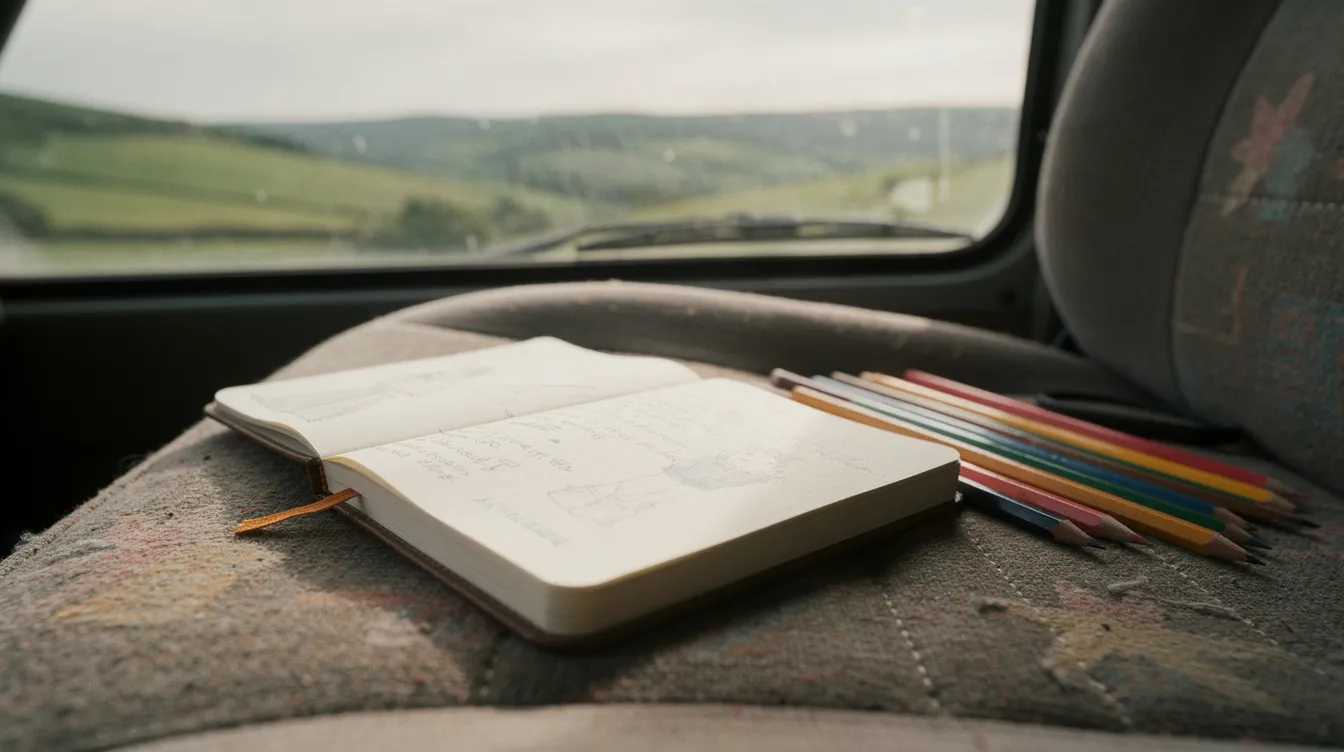
My kit is small. An A6 notebook lives in the van glovebox alongside a cheap pencil case with three colored pencils, a graphite pencil and a fineliner. Any spiral notebook works, and fancy sketchbooks are not needed. I use a pencil rather than a pen because I can smudge, erase and write in the cold without worry about ink bleeding.
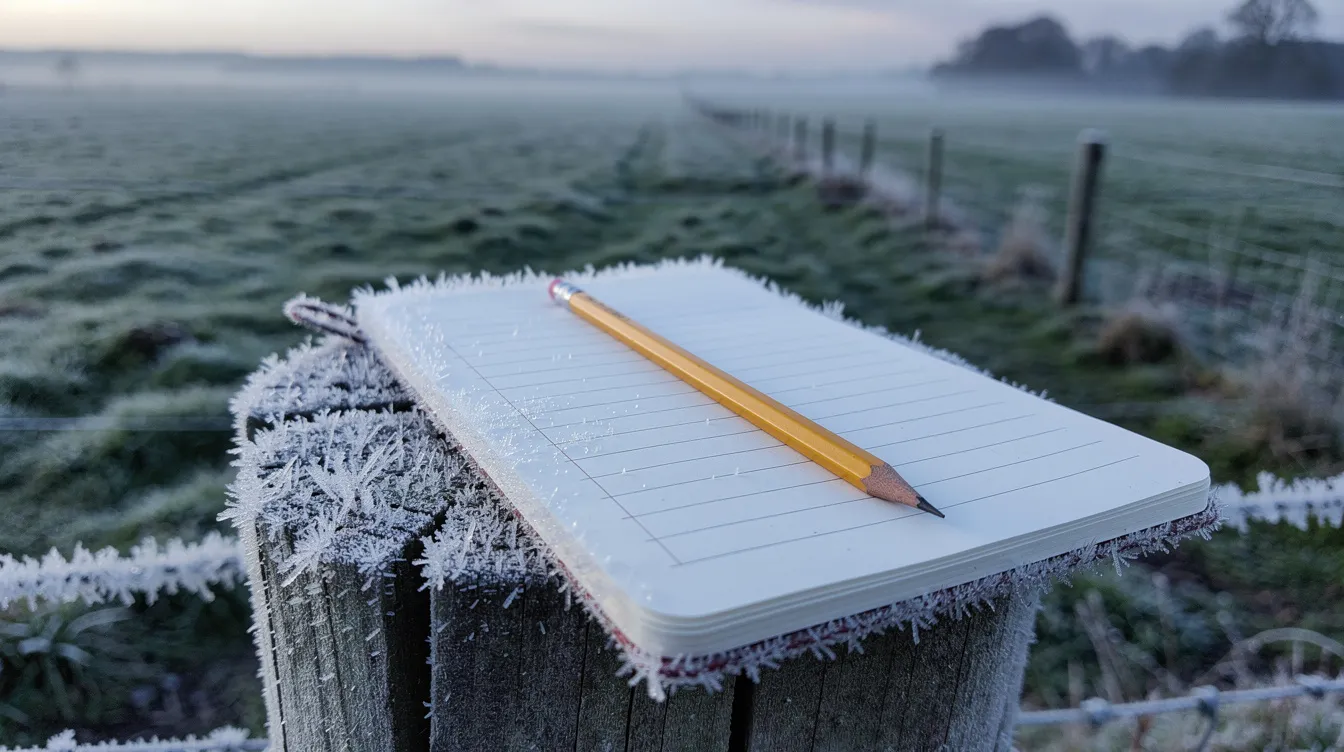
The header I never skip is date, time, place and weather. It takes about twenty seconds and turns a stray sentence into a record. A nature journal serves as a record of observations, and without that header the record has no anchor. Place can be as simple as “letterbox past the second cattle stop.” No map reference needed.
Compare these two lines:
-
“Fantail followed the van.”
-
“14 May, 7:40, frost on the fence wires, fantail followed the van.”
The second one is useful a year from now. The first one floats.
For weather, the Beaufort scale is a handy way to note wind, because “force 3” is more useful in a year than “a bit breezy.” I also note sky cover (clear, overcast, patchy cloud) and rough temperature.
Using prompts like “I notice,” “I wonder,” and “it reminds me of” aids journaling, especially for beginners. My starter layout looks like this:
3 June, 8:10 am, clear and cold. Frosty fern bank by the gravel road past Foxhill. Brown dots in rows under the fronds. Bellbird calling twice from the manuka above. Wind still. I wonder: do the brown dots mean it is ready to drop spores in winter?
That took about three minutes. Nature journals help record observations and enhance memory, and keeping a nature journal enhances your connection to nature over weeks and months. Visual aids like simple sketches and diagrams help with remembering details, so even a rough outline beside the text is worth doing. A nature journal helps track observations over time, turning scattered impressions into something you can learn from.
Simple routines to observe nature in everyday life
The trick is not finding time. It is attaching observation to something you already do. Here are routines that work for busy adults and teens:
-
One window, same time each morning. Watch for two minutes. What birds are on the wire? What is the light doing?
-
The letterbox pause. When you collect the mail, stop, look around and write one thing you notice.
-
A five-minute sit spot at lunch. Sit in one spot and do nothing except observe nature for five minutes.
-
A repeating route. I always pause at the same farm gate near Brightwater to scan the hills and note cloud shapes or stock movements.
Regular visits to the same site help identify seasonal changes and patterns. The same spot shows change more clearly than wandering does: leaf color shifts in early April, first frost dates, arriving migratory birds. Spending time in nature improves overall well-being, and quality time with nature increases concentration and happiness, even in small doses.
Phones can help as time stamps and quick reference photos, but try not to turn the outing into a photo shoot. A photo supports a journal entry. It does not replace noticing.
Observation prompts for each season
I write from the Southern Hemisphere, but these prompts are about patterns you can translate to your own seasons. Think of them as a menu, not a checklist.
Autumn (March to May): Watch roadside poplars and willows for color change. Look for fungi after rain. Note which birds have gone quiet. Check seed pods on the ground and ask what dropped them.
Winter (June to August): Record frost dates and where ice forms first. Notice bare branches against the sky and which trees stay green. Look for tracks in mud. Tracking signs like tracks and scats reveals hidden wildlife activity even on days when the world seems empty. Note water levels in streams after rain.
Spring (September to November): Watch for the first flowers, whether daffodils by a letterbox or kowhai along a highway. Listen for changes in birdsong and new calls. Note bees arriving on blossoms and ask which ones come earliest.
Summer (December to February): Listen for cicadas at different times of day. Note drought effects on roadside plants. Watch for fledgling birds and how they behave. Record cloud types before afternoon storms.
To turn a prompt into an entry: write the date, add a quick sketch or symbol, and note one behavior or change in a single sentence.
Learning to see patterns and changes over time
Observation becomes powerful when you start noticing patterns: repeated dates, repeated behaviors, cause and effect. I have three examples from my own notebooks that surprised me.
First, silvereyes arrive at one particular garden on my route in roughly the same week each October. I did not plan to track that. It built up one line at a time. Second, a roadside puddle near Wakefield fills and dries in a predictable rhythm with rainfall totals. Third, foxgloves on one bank flower about a week before those across the valley, probably because of sun angle.
Observing individual species during sessions develops sharper observation skills, and asking questions about observations deepens understanding. My casual version of phenology, the study of when things happen through the year, is a short running list at the back of the journal: first fantail nest, first foxglove, first frost, last swallow, each with just a date and a place.
If you want a mini project, try this: pick one tree or one patch of sky and record it once a week for three months, then look back through the pages. The patterns are there. You just need enough entries to see them.
Using field guides and simple tools without getting overwhelmed
Early on I wrote confident wrong names in my journal and then distrusted the whole page. Now I keep observations separate from guesses. On the page I write what I saw (“small brown bird on the wire, white eyebrow stripe, pumping its tail”) and mark guesses with a question mark (“maybe a young one? name to check”). I identify things later at home with a second-hand New Zealand bird guide and a small plant booklet. This keeps the record honest.
Patience is key to effective nature observation. Practicing patience and stillness allows wildlife to resume their natural behaviors, and neutral clothing and a quiet pace increase the chance of close wildlife encounters. The human brain notices more when it is not rushing.
Basic tools that help but are not required:
-
A pocket field guide for your region
-
A magnifying glass or hand lens
-
A pencil
-
Optional small binoculars for watching wildlife at a distance
Mention identification apps only as helpers, not authorities. Drawing and writing your own notes often teach more than an instant ID. One concrete moment that sticks with me: finally confirming a spur-winged plover from the field guide after weeks of describing a “big noisy bird in the paddock.” That sense of discovery is worth the wait.
Turning personal notes into citizen science projects
Citizen science projects are ways for ordinary people to share nature observations with researchers. Amateur observations contribute significantly to biodiversity records, and citizen science projects allow observers to contribute to environmental research. Categories you could contribute include first monarch butterfly of the season, backyard bird counts, flowering dates of common roadside trees, or the presence of certain species in your area.
Even simple dates and locations matter. Common species are often under-recorded because everyone assumes someone else is counting them.
I still treat my journal as a private practice, though some of my notes could go into online projects when I have time and confidence. Contributing is optional. The observations are just the beginning of what they could become, but they are already valuable to you.
Engaging kids (or a hesitant adult) in observing nature
My niece rode along on a school holiday run last April, and her questions changed what I noticed. She asked why one paddock was greener than the next, and I had no answer, which sent me looking at drainage patterns for a week.
Engaging kids in observing nature works best when it feels like a game, not a lesson. Here are activities that also help self-conscious adults relax:
-
Color hunt: Find five different greens in the garden and give each one a name.
-
The quietest sound: Sit still and compete to hear the smallest noise. Observation games like scavenger hunts make nature exploration fun.
-
Two-minute cloud: Draw the same cloud for two minutes without lifting the pencil.
-
Hand lens world: Kids can use hand lenses to see small details on bark, leaves or insects that are invisible at normal distance.
Engaging with nature can reduce stress and improve focus for children and adults alike. Keep sessions short and flexible. Use all five senses in kid-friendly ways, but skip tasting unless the food is known to be safe. The goal is shared discovery, not performance. You do not need to teach anything. You just need to wonder out loud.
Nature observation and drawing: seeing more by sketching
I believe that even a clumsy drawing makes me notice different things I would otherwise miss. In May 2022 I sketched a fern frond and suddenly saw tiny sori, the spore clusters, under the leaflets. I had ignored them for years. The act of drawing forced me to slow down and look.
Nature journaling can improve focus and reduce stress, and nature observations can enhance mental health and well-being. Drawing is one reason why.
Simple prompts that sharpen observation without requiring art skill:
-
Outline only. Trace the shape of a leaf with a single line.
-
Blind contour. Draw without looking at the page for thirty seconds.
-
Cloud thumbnails. Sketch three tiny cloud shapes in a row.
-
Arrows and labels. A rough outline with notes like “toothed edge, hairy underside” can replace a whole paragraph.
Stick figures and wobbly leaves count. The goal is to engage the eye and hand together. For readers interested in journaling with art, mixing drawing and writing on one page is where a nature journal starts to feel personal. And if you want to turn a written color note like “pea pod green” into an actual paint mix, mixing greens for leaves is a whole topic on its own. If sketching in front of others makes you self-conscious, drawing outdoors when self-conscious covers that. For the very first steps with a pencil outdoors, see sketching from nature for beginners.
I will also mention the Art by Chlo Drawing Club in passing. It is a long, follow-along style of colored pencil lessons that looks friendly to beginners working at their own pace. It is not journaling specific, but its patient approach suits this kind of practice.
Making nature observation a quiet, sustainable habit
Six years of casual note-taking have changed my mood on the route, especially on long, wet winter days in Tasman. Nature observation calms the mind and reduces stress, and I notice it most on the days I nearly skip. That calming effect is a side effect, not a promise, but it is real for me. Even nature-based tourism often emphasizes the importance of nature appreciation for exactly this reason: the world around us becomes richer when we pay attention.
Practical tips for keeping this going:
-
Lower the bar. One line a day beats a perfect page once a month. Write about the weather, the light, the absence of birds. Endless opportunities exist even on dull days.
-
Keep tools tiny and in the same pocket. If you have to look for your notebook, you will not use it.
-
Accept missed days without guilt. A gap in the journal is not a failure.
-
Do not tidy up. Crossed-out words and wobbly handwriting are part of the record. They show you were present, outside, paying attention.
Pick one very small practice from this article and try it this week. One tree, one sound, one line. Let curiosity, not pressure, lead the way. The natural setting does not need to be dramatic. Your surroundings, right now, are enough.
FAQ
How much should I write for each observation?
A few sentences is plenty: a header with date, place and weather, three or four specific details, and one question. Some days it is one line, and that is fine. More observations will come naturally on the days you have time.
Do I need to know species names to write observations?
No. Describe what you see and give it a nickname like “the little tail fanner,” then look up the proper name later and add it beside your description. Knowledge builds over time, not overnight.
Should I write in the field or at home?
Jot the raw observation on the spot because memory fades fast. Add identification guesses and research at home, where you have field guides and better light.
What if I cannot draw?
Write anyway. Simple outlines, arrows and labels are enough, and plenty of good entries are all words. There is no wrong way to record what you see.
What should I do on days when nothing seems to be happening?
Write about the weather, light or sounds and note that things were quiet. Even “no birds at the usual spot” is a useful observation when you read it back next year. Absence is data. A quick list of what is missing can be just as interesting as what is there.