
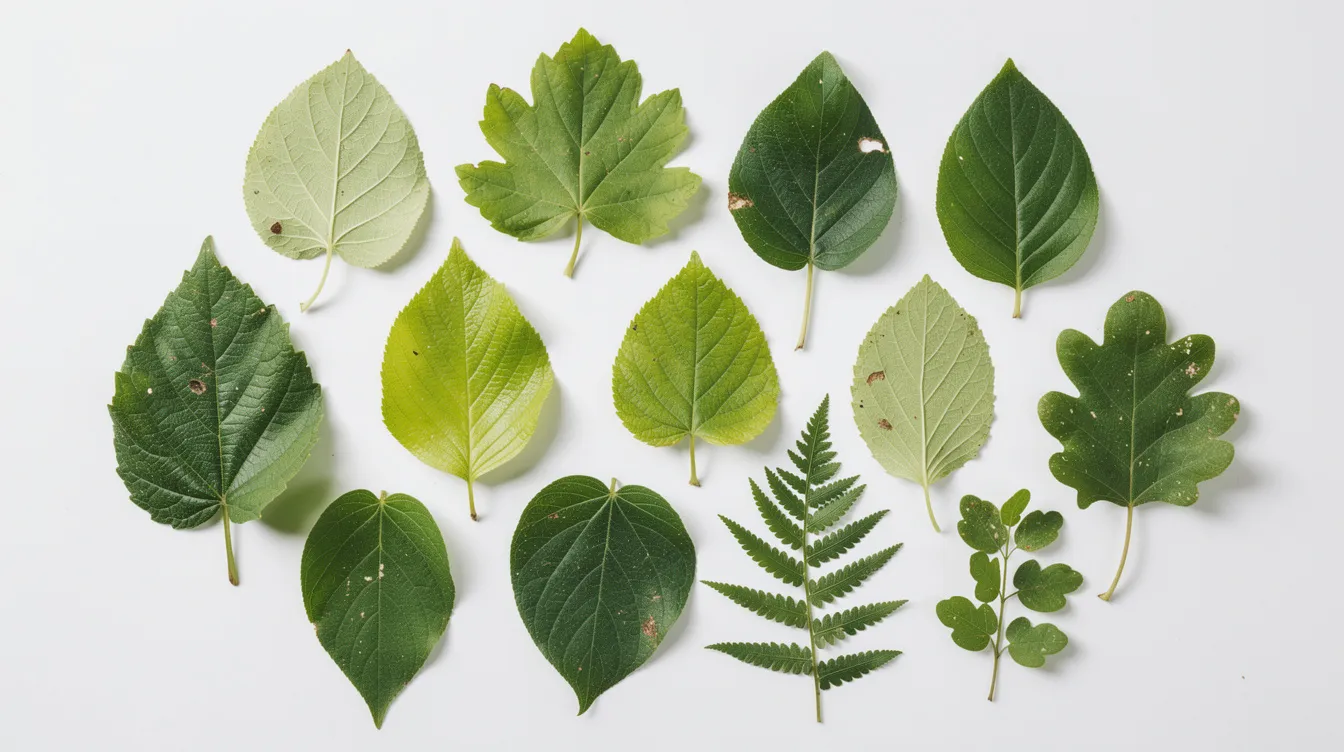
Last Tuesday an ice cream truck crawled past my mail van on a gravel road outside Nelson, playing Greensleeves through a tiny speaker. I had my sketchbook open on the steering wheel and a half-painted kawakawa leaf drying on the page. It struck me that I spend most of my journaling life trying to get greens right, and here was a song called after the colour itself. I started nature journaling six years ago after finding my grandmother’s shoebox of pressed ferns and trying to draw one at the kitchen table. Since then, green leaves have been the thing I paint most and struggle with most, and a traditional English folk song about a lady in green sleeves has quietly become my background music for mixing them.
Why a Traditional English Folk Song Greens Leaves Belongs in a Nature Journal
Greens leaves are rarely one tube color; the most useful way to paint them is to mix your own greens from yellows and blues so you can match soft olive, bright spring green, and deep shadowed leaves without reaching for black. Greensleeves was registered in September 1580 by Richard Jones in London under the title “A Newe Northen Dittye of ye Ladye Greene Sleves.” It is often credited to Henry VIII as a love song written for Anne Boleyn, but Henry died in 1547, a full 33 years before the song appeared in any records. The theory is romantic but the history does not support it.
I am not a music historian. I am a rural mail carrier who keeps a cheap watercolor tin in the glovebox and hums old tunes while painting leaves. If you are an adult or teen trying to draw the nature around ordinary days, especially as a beginner or a returning hobbyist with little time and a small budget, this is a simple way in. Each section below gives a piece of the song’s story alongside practical help with mixing leaf greens, a few nature-journaling prompts, and notes on the small portable kit I actually carry, so you can listen, look closely at real leaves, and paint at the same time. Picture a quiet morning on a gravel road, sky rain potatoes piled in a crate by a letterbox, and a journal open to a blank page ready for the first wash.
The Real Story Behind the Traditional English Folk Song “Greensleeves”
The song is a broadside ballad, not a Tudor court piece. The melody is based on Italian musical styles, specifically two chord progressions called passamezzo antico and romanesco, and the romanesca style did not reach England until after Henry VIII’s death. The song is written in a melancholy minor key, which gives it that aching quality. These Italianate patterns were fashionable in the later 1500s, during the Renaissance, well after Henry’s death. Shakespeare referenced Greensleeves in his 1597 play The Merry Wives of Windsor, where Falstaff calls for the sky to rain potatoes and thunder to the tune of Greensleeves, which tells us the tune was already popular across England by Elizabeth I’s reign. Henry did write music, pieces like “Pastime with Good Company,” but Greensleeves was a folk song spread by street singers and broadside ballad printers, not by a king. I felt oddly relieved when I learned this. I like the idea of an unknown working musician making something that rolled through centuries, though, alas, the romantic Henry VIII story does not hold up. It feels closer to my own life as a hobbyist: you make a small thing, you share it, and maybe it holds.
Green Sleeves, Green Leaves: Imagery, Symbolism and Nature
Green works hard in both the lyrics and my journal. In English folk song tradition, Lady Green Sleeves is often treated as the woman addressed in the lyrics. One possible meaning is that she is flirtatious or sexually free, though another reading simply connects green clothing with young unmarried women enjoying outdoor life. One interpretation even casts her as a prostitute, with green sleeves explained by rolling in the grass. Either way, the song’s meaning remains uncertain, though green still suggests something alive and uncontrolled.
On my route the bush offers about fifty shades of green in a single glance: kowhai leaves in yellow green, kawakawa in deep glossy green, willow in silver green, meadow grass in bright lime. A premixed tube gives you exactly one of those. A warm yellow mixed with ultramarine gives a soft olive. A lemon yellow with a cool blue gives a bright spring green fine for new growth. That range is what makes painting leaves endlessly interesting.
Green is also the colour of the food that keeps us going between deliveries. The leafy greens I toss into my lunch are packed with vitamins A, C, E, and K, and vitamin K plays a vital role in blood clotting and bone mineralization. Green leafy vegetables are rich in important minerals including calcium, iron, magnesium, and potassium, and that potassium helps regulate blood pressure and supports heart health. High levels of dietary nitrates in leafy greens help lower blood pressure too. Specialized plant compounds in greens help neutralize free radicals, and antioxidants found in leafy greens fight oxidative stress and systemic inflammation. Leafy greens contain lutein and zeaxanthin which protect eye tissues and support vision, something any painter should care about. Regular intake of leafy greens is linked to slower rates of cognitive decline, leafy greens are low in glycemic impact which improves insulin sensitivity, and dietary fiber from greens promotes regular bowel movements and digestive health. Leafy greens help with weight management due to their low calorie counts and high fiber content. Vitamins A and C support normal immune function and protect cells from oxidative damage. Eating a variety of leafy vegetables daily increases nutrient intake, and adding healthy fats like olive oil improves absorption of fat-soluble vitamins from greens. I sometimes sketch the spinach or silver beet on my chopping board as a warm-up, and their low cost as lunch ingredients is a nice bonus as well as a reminder to actually eat the stuff.
Try these prompts: paint leaves that feel melancholy, matching the minor key of the song. Paint leaves that feel festive, all bright spring lime. Paint leaves that feel courtly, deep and formal. Listen to a recording first and note the images that come to mind, whether fields, forests, or courtyards, then find a real leaf near your home and paint it in that mood.
From Henry VIII to Ice Cream Vans: Where We Hear Greensleeves Today
The tune drifted from an ice cream van while I was delivering parcels last week, and the same melody once echoed through Elizabethan London streets as a popular broadside. Greensleeves became an ice cream truck jingle in 1958, and it has not stopped since. In the late 1500s, answer ballads appeared almost immediately after the registration, including “Ye Ladye Greene Sleves answer to Donkyn hir frende.” By the 19th century the melody was joined to the Christmas carol text “What Child Is This?” written in 1865, which many people know from church services even if they have never heard the original love song of a rejected lover. Some arrangements today feature instrumentation that includes piccolo trumpet and multiple trombones, giving the piece a weight that the ice cream version strips away. Elvis Presley adapted Greensleeves into “Stay Away” in 1968 on his album, proving the tune could roll into rock. Leonard Cohen never recorded it but you can imagine his voice on those lyrics. Its plainness also helps explain why some people find it irritating as hold music. Jazz musicians have taken the refrain apart and rebuilt it. Greensleeves was voted the most annoying hold music in 2001, a strange delight for a song about rejected love. The contrast between the slow, dignified choir version and the brisk chiming of an ice cream truck on a summer road is almost funny. I sometimes set a favourite version on quiet repeat and fill a journal spread with quick leaf sketches that match the tempo, one play for each small painting.
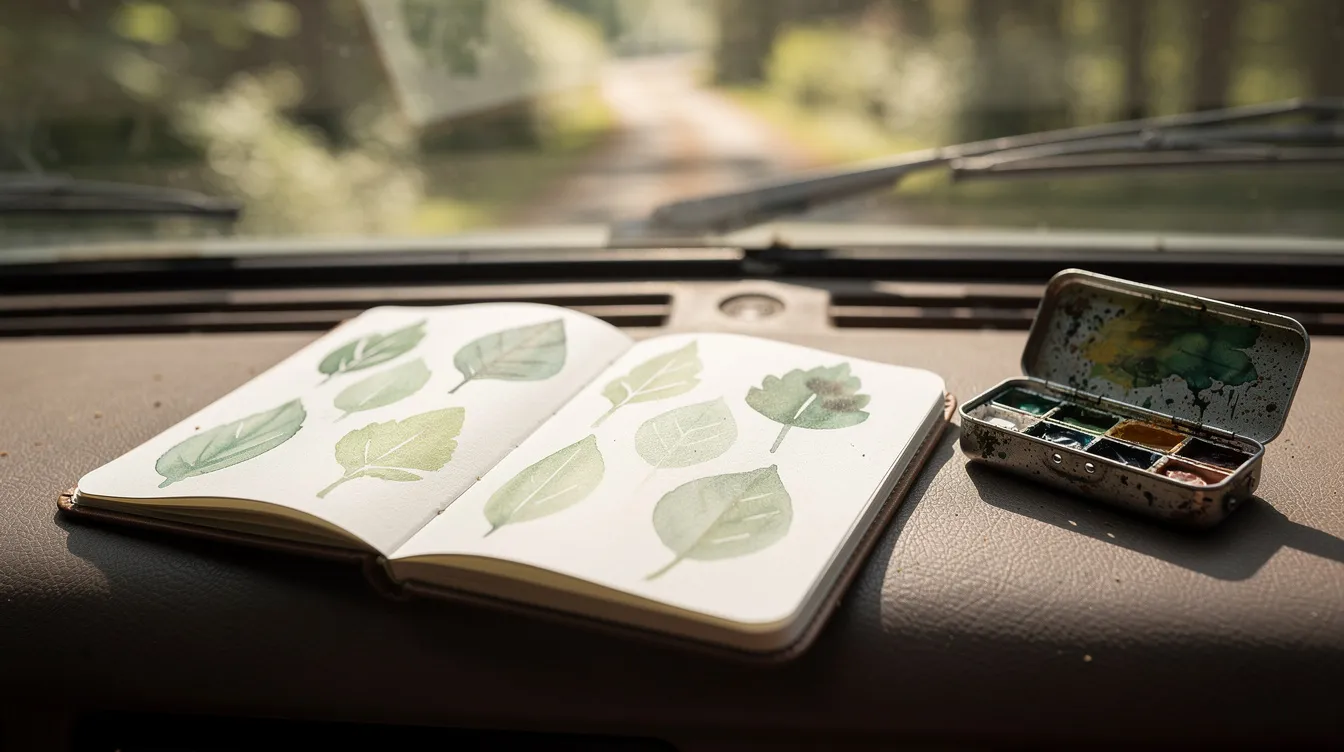
Listening While You Draw: A Simple Greensleeves Leaf Study
This is a 20 to 30 minute exercise. Put on any version of Greensleeves, gather your kit, choose a leaf, and paint it. The kit I keep in the glovebox is small: an A5 sketchbook, a tiny watercolor tin, a pen, and a water brush. Two yellows (one warm gold, one lemony), two blues (ultramarine and a cool phthalo type), and a burnt sienna cover nearly every leaf on my route. I keep one sap green pan for lazy days when I want a base wash without thinking. If you are thinking about starting a watercolor journal, this is a good kit to begin with.
Mix on the palette, not the paper. Start with yellow in a bigger puddle than you think you need, then add a speck of blue. Dull the result with a touch of burnt sienna or red, because straight blue plus yellow often looks plastic. This is where understanding complementary colours matters: red cancels green, so tiny amounts of a warm earth tone bring a mix back to something natural. For a quick primer, read about complementary colors before you mix.
Pick one real leaf. A clover, a rose leaf, or a fern frond. Place it beside the sketchbook. Block in the shape lightly with your brush. Paint a pale wet yellow green base first. While it is still damp, drop in a bluer green for midtones. Let it dry, then add shadow shapes and fine veins with a darker mix, watching the leaf change colour as the song repeats. Always paint at least three different greens in any group of leaves: a light, a mid, and a shadow.
For dark greens without black, mix ultramarine or phthalo blue with burnt sienna, then add a bit of yellow to keep the green visible. Viridian is a traditional cool, transparent green worth adding if you want one extra pigment in your kit. Write a short line from the lyrics in the margin if it fits the mood. Accept wobbly edges. My first fern drawing looked stiff until I relaxed and let the brush follow the early music muse of the song instead of gripping tight. For a patient, plain language way into this, the calm coloring class I took through Lisa’s drawing academy helped me stop chasing perfect edges.
Journal Prompts Inspired by the Story Behind the Song
A “Richard Jones page”: write 1580 at the top, copy the newe northen dittye title in your own hand, and surround it with lace-like leaf sketches. A “not quite Henry VIII” spread: write one sentence about a myth you once believed, a cast-off piece of mythology you held as truth, then paint three leaves in slightly different greens to show how the same story looks different when you look closely.
A “folk song walk”: walk slowly for ten minutes humming any traditional tune, paint only the leaves you notice, and add weather and date as field notes. A “Christmas carol in summer” page: listen to “What Child Is This?” in whatever season you are in (June for me in the southern hemisphere, when the land is cool and the greens are dark) and paint the greens you can find. For readers who want a seasonal prompt once the greens turn warm, try drawing red leaves on a tree in autumn.
Keep prompts forgiving. Some days I manage only one scribbled leaf and a date line between parcel deliveries, and that still counts as nature journaling.
Keeping Greensleeves in Your Sketching Routine
This centuries old folk song has become part of my quiet routine in the mail van, especially on long grey winter days when the hills outside Nelson are all muted greens. I pick one day a week as Greensleeves day, keep a short playlist on my phone, and pair the listening with a single leaf study. One play of the song is enough time for a small sketch. Two plays give a full page. There is no pressure to finish. New to this? My post on getting started with nature journaling walks through the basics.
Fern and Pencil is just my hobby blog, not a course. I write as a fellow beginner who still struggles for time and confidence. If you are brand new, start with getting a small kit and one blank page. If you want a relaxed, plain language way to think about colour, I genuinely recommend the calm colouring class I took through Lisa’s drawing academy. It helped me stop fussing over the “right” green and just paint what I saw.
I finished my deliveries today, parked for five quiet minutes by a hedgerow, and heard a faint tune from a distant house. I added one new green leaf to the journal before heading home.

FAQ
Do I need a tube of green at all? No. Every green can be mixed from a yellow and a blue. I keep one sap green only for speed on non-focal washes.
Why do my greens turn muddy? Usually too many pigments or too much of the opposite colour. Keep to two or three colours per mix and add dulling tones in tiny amounts.
What is the best blue and yellow pair for natural greens? Warm yellow with ultramarine for soft olive tones. Lemon yellow with a cool blue for fresh bright greens. Having both pairs covers most leaves you will encounter.
What does “Greensleeves” mean? The meaning is uncertain. An early printed title appears as Lady Greene Sleeves, and people have read the woman in the song as a flirt, an unmarried young woman, or, less kindly, someone with a bad reputation.
Can I use the same method with colored pencil? Yes. Layer yellow first, then blue, then a touch of warm brown or red on top to mute it. Use light pressure and build slowly so the paper does not get overworked. If you want structured lessons for that, I have compared online colored pencil courses for botanical work.